
 en
en Arkadia Theatre
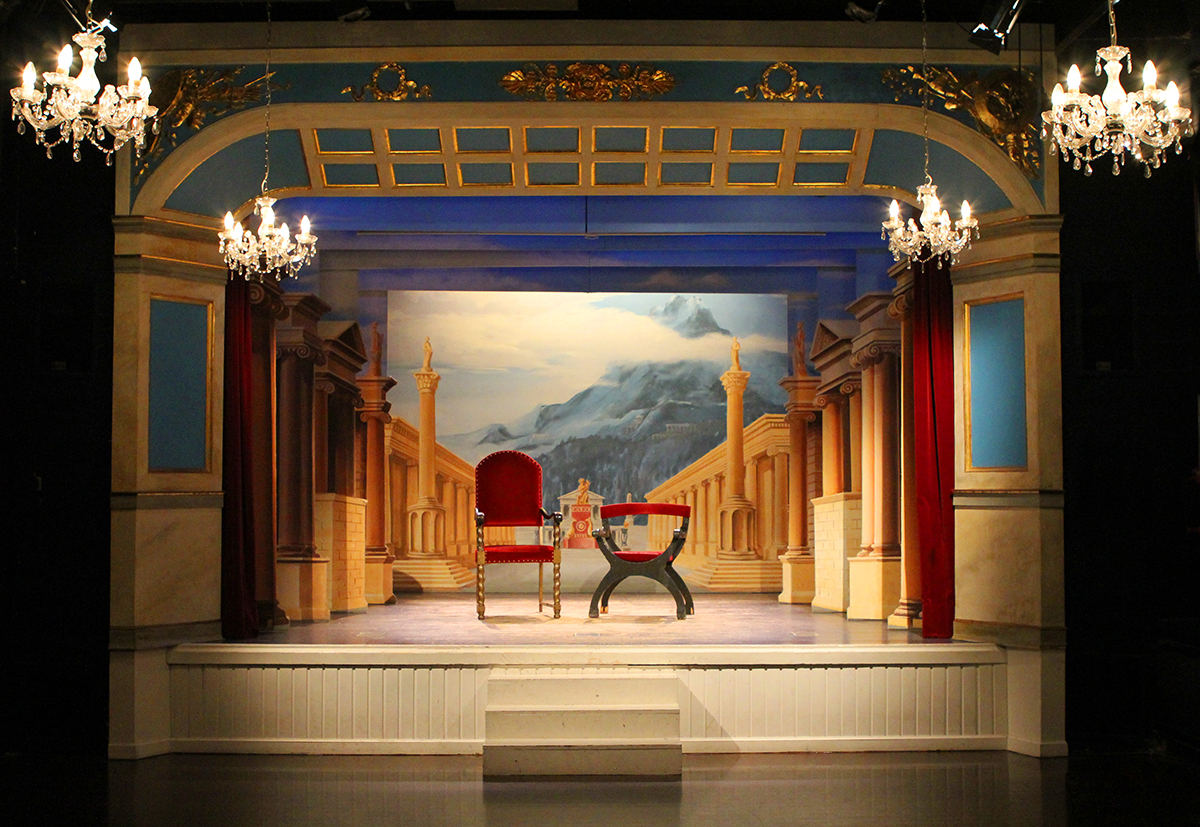
The eye-catching feature of the Arkadia Theatre is its stage, which is modeled on the historic Engel Theater, but the exhibition also presents other aspects of theater history!
The Arkadia Theatre was opened at the Theatre Museum’s first permanent exhibition in 1999. The small-scale replica of the theatre house designed by C.L. Engel in 1820s, quickly became a favorite among visitors and has retained its place even when the exhibitions around it have changed.
The name Arkadia Theater has a historical ring to it. The theater of the same name in Helsinki was home to the first professional Finnish-language theater, Suomalainen Teatteri, in the late 19th century. The height and width of the stage opening is half the size of the original, and the decorations on the arch, as well as the curtain and backdrops, are based on Engel’s sketches. The atmosphere of the theatre of the 1800s lingers also in the dressing room, accessed from the back corner of the stage.
The dressing room presents the history of Baroque theater and the structures of its stage machinery through the Drottningholm Theater in the Swedish royal palace and the Engel / Esplanade / Arkadia Theater. Stage costumes and accessories can be tried on, as can the rain and wind machines.
The display case at the back of the Arkadia auditorium showcase treasures from the museum’s collections. On display are, for example, Emilie Bergbom’s travel trunk from the 19th century and a prompter’s box used at the National Theater until the 1950s. Also from the National Theater is a wooden mechanical time clock device, which features names familiar from the theater and Finnish cinema. The display case shows costumes from the early 20th century against the backdrop of a copy of the Juorukoulu performance (Finnish National Theater, 1906).
In the side corridor visitors can view theater posters, programs, and tickets. The poster wall shows how posters developed and changed in the 19th and early 20th centuries. From the very beginning, programs have been a source of information for audiences about performances and their creators.
The side corridor also features a puppet theater section, which provides a concise overview of Finnish puppet theater from the early 20th century to the present day. The presentation begins with the first professional puppet theater artists, Kalle Nyström and Bärbi Luther. The puppet theater cabinets display puppets from the museum’s collections. The earliest ones are Mona Leon’s Prince and Princess from the 1950s, and the newest ones are puppets from Satu Paavola’s Diagnosis and Iida Vanttaja’s Frog Princess performances from the early 2000s. Puppet theater in the 2000s is presented through texts and pictures.
The exhibition features two portable puppet theater stages and experimental puppets that visitors can use to create their own performances, as well as two interchangeable backdrops depicting Finnish forests. Visitors can perform in front of them and experiment with how lighting affects the stage image.